
By Ugochukwu Ugwuanyi
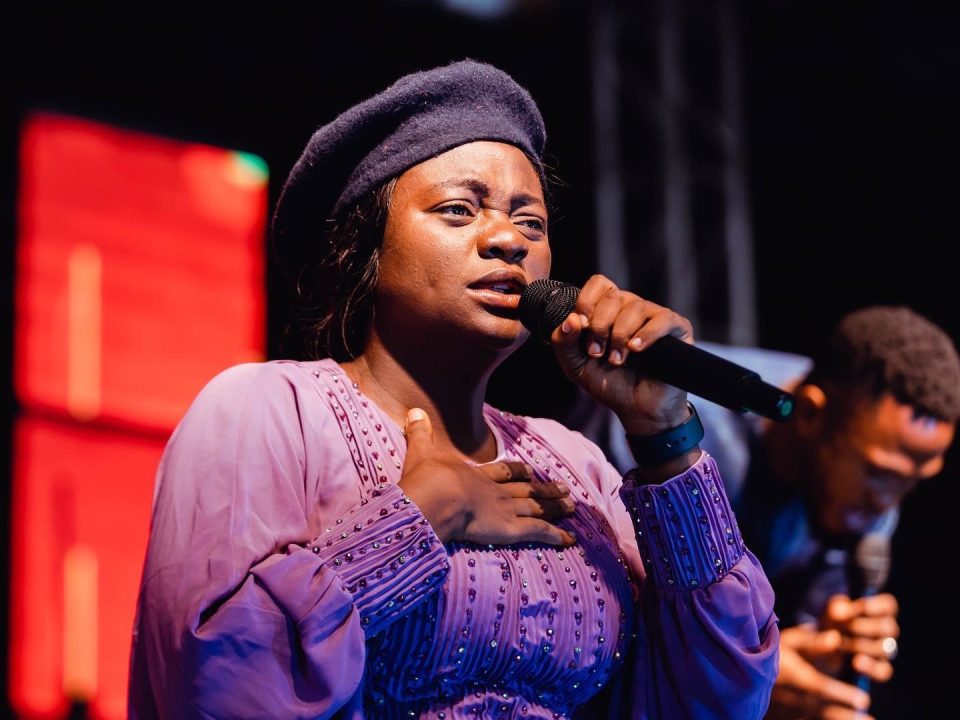
Nigerian social media can be a ruthless space. When its trolls come for you in an onslaught popularly known as “dragging,” even the strongest individuals may struggle to withstand the emotional toll. Anyone who watched the apology video posted on Instagram by gospel music sensation Yinka Alaseyori on Wednesday would understand. She appeared visibly distressed, like someone who had spent days dealing with the consequences of being misrepresented online.
She deserves credit for the humility she displayed in taking responsibility for the controversy, despite her insistence that her remarks had been misunderstood. Rather than dwell on her grievances, she chose to apologise and express empathy. Yet, anyone genuinely interested in truth and fairness should consider whether her words were taken out of context and whether her intentions were accurately represented.
As a communications professional, I have long maintained that words derive much of their meaning from the circumstances in which they are spoken. Context is not an accessory to communication; it is often its essence. This is why linguists frequently remind us that the meaning of a word lies in its context.
One statement from Alaseyori’s apology is particularly revealing:
“Two days ago, I made a video of about one hour and thirteen minutes in which I prayed for the kidnapped children, grieving families, government officials, the military, the land of Nigeria, and everybody in pain as a whole. I also discovered that the video had been cut from the original.”
This assertion suggests that the viral clip which triggered the backlash did not present the full scope of her message. If portions of a one-hour prayer session were selectively extracted and circulated, then the public conversation may have been shaped by an incomplete picture.
Critics interpreted the clip as an attempt to excuse government failures or promote political interests. The controversy intensified when social media users resurfaced footage showing the singer interacting with prominent members of the ruling party. For many observers, these images appeared to confirm their suspicions.
However, Alaseyori’s clarification indicates that her comments were intended as an expression of faith rather than a political defence. Her argument was that prayer could contribute to the rescue of abducted schoolchildren and others held captive by criminal groups. Whether one agrees with that position or not, it is important to engage with what she actually meant rather than what others assumed she meant.
This does not diminish the legitimate expectation that government must fulfil its constitutional responsibility to protect lives and property. Section 14(2)(b) of Nigeria’s Constitution states that the security and welfare of the people shall be the primary purpose of government. Citizens are therefore right to demand effective action from those entrusted with public office.
At the same time, many Nigerians see prayer as a complementary response to national crises rather than a substitute for government action. For believers such as Alaseyori, spiritual intervention and practical action are not mutually exclusive. They coexist.
As a gospel minister, Alaseyori’s primary tool of engagement is her faith. Her response to tragedy was to organise prayer, not because she occupies public office or possesses executive authority, but because she believes that intercession is part of her calling.
To the best of public knowledge, she is neither a government spokesperson nor an official tasked with defending state policies. Her comments were not framed as a policy statement but as a religious reflection on a painful national issue. Like every Nigerian citizen, she has the right to express her convictions, provided those convictions do not violate the law.
What is striking about this episode is how quickly public sentiment crystallised against her before many people had reviewed the full context of her remarks. In the age of viral clips and algorithm-driven outrage, nuance is often the first casualty. A few seconds of video can outweigh an hour of explanation.
Ironically, many of the same voices that criticised Alaseyori have often demanded that religious leaders speak more boldly about national issues. Yet when public figures do speak, they risk having their comments reduced to headlines, fragments, and assumptions. Understandably, this reality discourages many influential Nigerians from engaging in public discourse.
The phenomenon resembles a digital version of the jungle justice that once plagued many communities. In those instances, an accusation alone could trigger mob action before facts were established. Social media can sometimes operate in a similar fashion. A viral post becomes the accusation, and public outrage becomes the verdict.
The lesson from the Alaseyori controversy is not that public figures should be exempt from criticism. Criticism remains essential in a democratic society. Rather, the lesson is that fairness requires context, and justice requires hearing all sides before reaching conclusions.
There is always another side to a story. Before joining the next online outrage, perhaps we should first ask whether we have heard the whole story.
Ugochukwu Ugwuanyi is a sage, storyteller, and branding strategist. He can be reached via nmiringwu@gmail.com.
