
By Ugochukwu Ugwuanyi
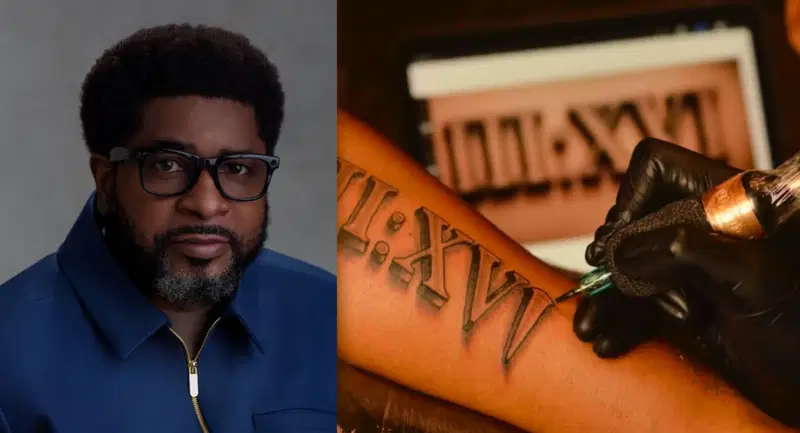
Pastor Kingsley Okonkwo, founder of David Christian Centre, recently unveiled a Roman numeral tattoo inspired by John 3:16. What might have been a personal decision quickly became a national conversation across Nigerian Christian circles.
The reactions have been divided. Some believers see the tattoo as harmless personal expression. Others argue that a pastor’s body is not just private space but public symbol. In a society where clergy are held to heightened moral and cultural expectations, even small choices carry weight.
This debate is less about ink and more about interpretation.
The Liberty Argument
Supporters of Pastor Kingsley point out that the New Testament does not explicitly forbid tattoos. They argue that the Old Testament reference in Leviticus 19:28 must be understood in its historical and cultural context. From this perspective, the gospel centers on inner transformation, not external markings.
Some also believe that cultural engagement requires flexibility. Just as Paul wrote in 1 Corinthians 9:20 about becoming “all things to all people,” they argue that pastors today may adopt nontraditional expressions if it helps them reach audiences who feel alienated by rigid religious imagery.
For these supporters, the tattoo is not rebellion. It is strategy.
The Responsibility Argument
Critics, however, focus on pastoral responsibility. While they acknowledge Christian liberty, they emphasize the principle found in 1 Corinthians 10:23: “All things are lawful, but not all things are beneficial.”
Their concern is not the tattoo itself but the potential ripple effect. In many Nigerian churches, pastors are seen as models of spiritual discipline. What a leader normalizes may be interpreted as endorsement by younger or less mature believers. For them, leadership requires restraint, not experimentation.
This position is not necessarily rooted in condemnation. It reflects a conservative understanding of pastoral example in a highly visible role.
A Cultural Moment
The intensity of the reaction reveals something broader about Nigerian Christianity. Faith in Nigeria remains deeply communal. Religious leaders are not viewed as private individuals but as custodians of shared moral identity.
When such a leader makes a visible change, the community responds, sometimes passionately. Social media amplifies that response, turning personal decisions into public referendums.
Yet it is worth noting that Christianity globally is not monolithic. In some contexts, tattoos among clergy are unremarkable. In others, they remain controversial. Nigerian Christianity sits at a crossroads between tradition and global cultural shifts, and this controversy exposes that tension.
Beyond the Controversy
Pastor Kingsley and his wife, Pastor Mildred, are widely known for their teachings on relationships, marriage, and emotional intelligence. For many followers, those contributions outweigh the symbolism of a tattoo. For critics, symbolism matters precisely because of the platform he holds.
Both realities can exist at once.
Ultimately, different churches will land differently on this issue depending on doctrine, culture, and conviction. The debate may not end in consensus, but it has opened a necessary conversation about leadership, liberty, and perception in a digital age.
Perhaps the larger question is not whether a pastor can wear a tattoo, but how faith communities negotiate change without fracturing over symbols.
