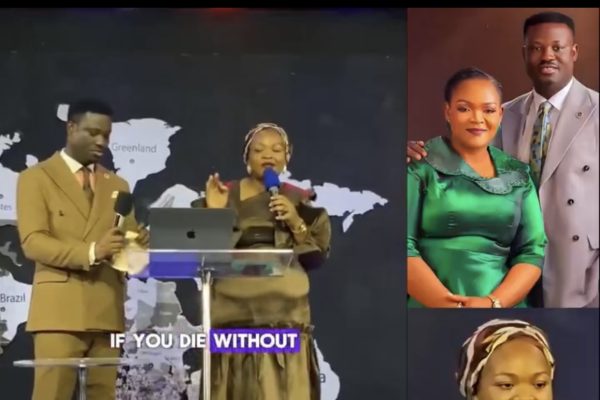

The challenges highlighted by Afolabi-Brown’s experience explain why many Pentecostal churches encourage members to seek pastoral guidance before entering serious relationships. While some critics dismiss the practice as unnecessary interference, it often serves as a form of pastoral care rather than control.
Church leaders are expected to safeguard not only individual members but also the health of the congregation. Relationships that begin with genuine intentions can sometimes end in ways that leave emotional wounds, divided ministries, and fractured fellowship. Wise pastoral counsel cannot eliminate heartbreak, but it can help believers approach relationships with greater maturity and discernment.
Even so, safeguards alone are not enough.
Recent comments by Pastor Leke Adeboye, who disclosed that some church workers in the Redeemed Christian Church of God (RCCG) were involved in what he described as “situationships” or cohabitation, suggest that many congregations continue to grapple with issues of relationships, holiness, and accountability. His remarks underline a broader concern facing churches today: discipleship must shape character before relationships begin to shape people’s lives.
The issue, therefore, is bigger than courtship. It is about spiritual maturity.
When Church Culture Sends the Wrong Message
Many churches have invested heavily in programmes for singles, marriage seminars, and relationship conferences. These initiatives have undoubtedly helped countless believers prepare for healthy marriages.
However, problems arise when the church unintentionally becomes known primarily as a place to find a spouse rather than a place to grow in Christ.
Some people now choose congregations based less on biblical teaching or spiritual direction than on the perceived likelihood of meeting a future husband or wife.
When this happens, the church risks sending the wrong message.
Evangelism can gradually give way to marketing. Fellowship becomes networking. Ministry becomes secondary to romance.
The irony is that what appears to strengthen membership in the short term may eventually weaken it. Relationships that begin inside the congregation sometimes end with one or both individuals leaving the church altogether.
Instead of strengthening retention, church courtship can occasionally produce the opposite effect.
The Church’s First Calling
None of this suggests that believers should avoid relationships within the church.
Indeed, many godly marriages have grown out of congregational fellowship and continue to enrich both families and local assemblies.
The lesson is simply that relationships must never replace discipleship as the church’s central mission.
Jesus made that priority unmistakably clear when He declared that the greatest commandment is to love the Lord with all one’s heart, soul, and mind. Every other relationship should grow out of that primary devotion rather than compete with it.
When believers remain grounded in Christ, disappointments, however painful, are less likely to become reasons for abandoning fellowship or withdrawing from service.
Likewise, churches must be intentional about preparing members not only for marriage but also for emotional resilience, forgiveness, reconciliation, and spiritual maturity.
These qualities often determine whether difficult seasons become moments of growth or occasions for departure.
Staying the Course
The New Testament repeatedly calls believers to pursue unity, peace, and maturity within the Body of Christ.
That responsibility extends to romantic relationships.
Congregational relationships should never deteriorate to the point where former partners are unable to worship together, serve together, or demonstrate the grace they profess to believe in. Such situations test not only personal character but also the spiritual culture of the church itself.
For this reason, churches must continue creating environments where accountability, integrity, and genuine discipleship remain stronger than personal interests.
As Scripture reminds believers, “Catch for us the foxes, the little foxes that ruin the vineyards” (Song of Solomon 2:15). Small compromises often produce larger consequences if left unattended.
Conclusion
Morayo Afolabi-Brown’s revelation is more than a personal story. It serves as a timely reminder that churches must carefully balance the natural development of relationships with their higher calling to make disciples.
Romantic relationships will always exist within Christian communities. Many will blossom into healthy marriages that honour God and strengthen the church.
Yet when courtship overshadows ministry, or when broken relationships become reasons to abandon fellowship, everyone loses.
The church is at its strongest when Christ remains its central attraction and every other relationship finds its proper place around Him.
Editor’s Note
This article is published under Faith & Culture. The views expressed are those of the author and do not necessarily reflect the editorial position of Mirror African Diaspora.
Author Bio
Ugochukwu Ugwuanyi is a Sage, Storyteller, and Branding Specialist who writes on faith, communication, and culture. He welcomes readers’ feedback via nmiringwu@gmail.com.