
By Ugochukwu Ugwuanyi
Few experiences test faith as severely as personal suffering.
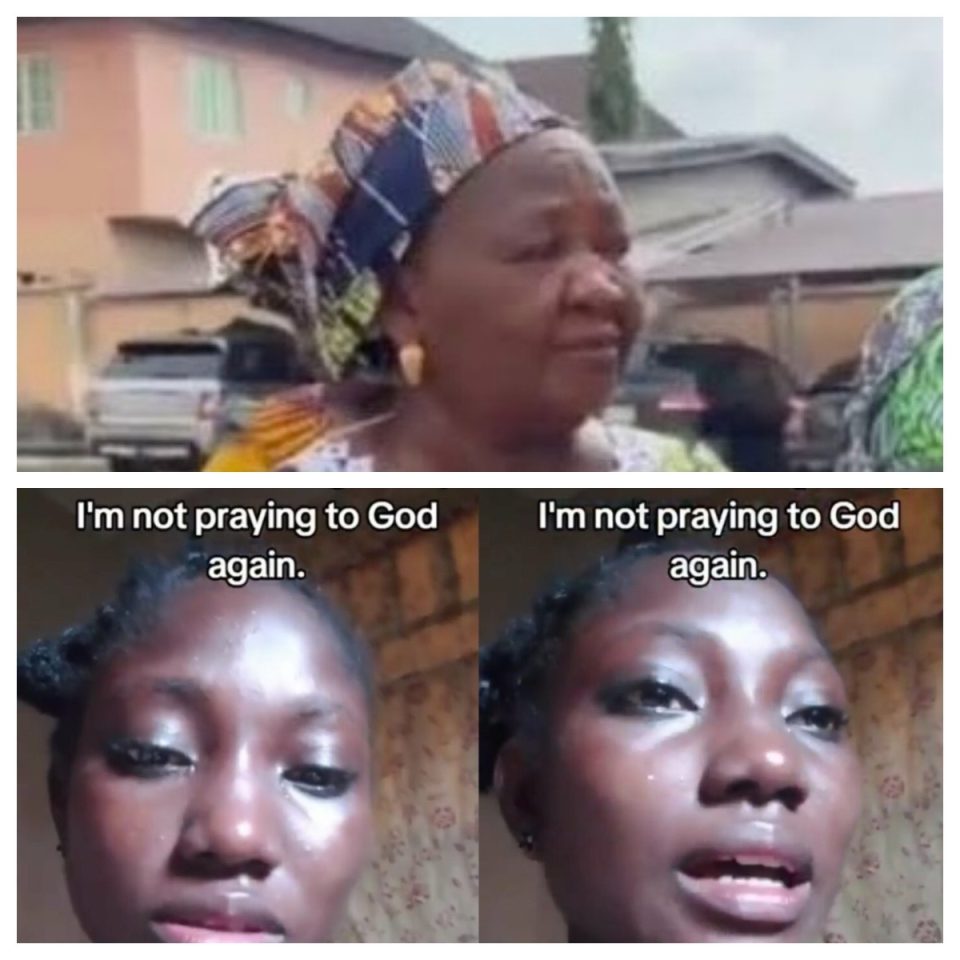
Recent events in Nigeria have brought two contrasting responses into public view. One came from Madam Olufunmilayo Adelabu, whose daughter and grandchildren were abducted and later released. The other came from a young Nigerian woman whose emotional video expressing disappointment with God went viral online.
Though separated by age, circumstance, and outlook, both women found themselves confronting the same question: what happens to faith when hardship becomes deeply personal?
A Story of Gratitude Amid Crisis
The kidnapping of schoolchildren and other residents in Oyo State has renewed concerns about insecurity across Nigeria. Against this backdrop, the release of Busayo John-Paul and her children was greeted with relief by family members and well-wishers.
Yet what attracted attention was not merely the family’s reunion but Madam Adelabu’s response afterward.
While celebrating her loved ones’ freedom, she spoke about other victims still in captivity and expressed hope that they too would be reunited with their families. Her remarks reflected an attitude of gratitude tempered by empathy.
Rather than viewing her family’s rescue in isolation, she connected it to the broader suffering experienced by countless Nigerians facing similar circumstances.
The Challenge of Unanswered Expectations
Around the same period, a young Nigerian woman drew attention online after posting a video expressing frustration over her struggles and what she perceived as God’s silence.
Her emotional remarks resonated with many people who have experienced disappointment, hardship, or delayed expectations despite prayer and faith.
Whether one agrees with her conclusions or not, the video highlighted a reality that many believers rarely discuss publicly: faith can be difficult to sustain when suffering appears unending.
Faith and Human Response
The contrast between these two women illustrates how differently people respond to adversity.
For some, hardship strengthens dependence on faith and deepens compassion for others. For others, the same hardship raises difficult questions and creates feelings of abandonment or frustration.
Neither reaction is unusual.
Throughout history, moments of crisis have often produced both resilience and doubt. Religious traditions themselves contain stories of individuals who wrestled with uncertainty while seeking meaning amid suffering.
This suggests that faith is not merely tested during prosperity but revealed through the ways people navigate disappointment and loss.
Beyond Individual Circumstances
The discussion also points to broader social realities.
Nigeria’s persistent challenges, including insecurity and economic hardship, place enormous pressure on citizens. As a result, personal struggles are often intertwined with national concerns.
In such an environment, questions about faith, hope, and perseverance become more than private matters. They become part of the wider conversation about how people cope with uncertainty and maintain resilience.
Lessons from Two Responses
The stories of these women offer no simple formula for dealing with hardship.
However, they do illustrate the importance of perspective.
One response focused on gratitude and concern for others despite personal pain. The other expressed the anguish that can emerge when expectations remain unmet.
Both responses are deeply human. Together, they reveal the complex relationship between faith and suffering.
Conclusion
Hardship has a way of exposing what people believe, value, and rely upon.
The experiences of Madam Adelabu and the young woman remind us that adversity does not produce identical outcomes. Some emerge with renewed hope. Others struggle with disappointment and doubt.
Yet both responses reflect a shared human desire for meaning amid suffering.
In a nation where challenges continue to test resilience, the conversation about faith remains as relevant as ever.
Editor’s Note
This article is published under Faith & Culture. The views expressed are those of the author and do not necessarily reflect the editorial position of Mirror African Diaspora.
Author Bio
Ugochukwu Ugwuanyi is a Sage, Storyteller, and Branding Strategist who writes on faith, culture, and society. He welcomes readers’ feedback via nmiringwu@gmail.com.
