
By Peter Omonua
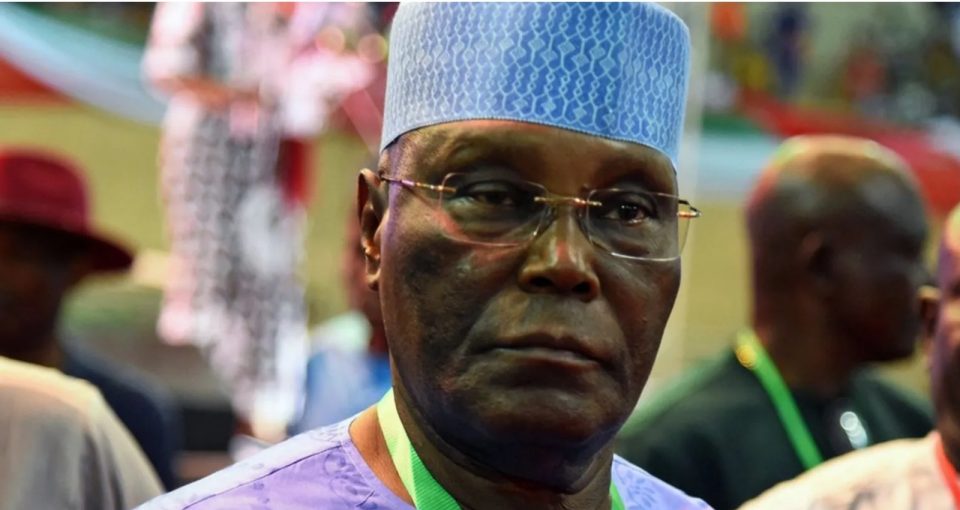
I want to add my voice to the multiplicity of calls to former Vice President, Alhaji Atiku Abubakar, to be a statesman. I am not sure what the motivation for his interest in the presidency is, knowing that a Northerner completed an eight-year term before it was rotated to the South. Whatever it is, I seriously appeal that he heeds the voice of reason, for equity and fairness.
During interviews granted by three other top contending candidates, i.e. Donald Duke, Adewole Adebayo and Peter Obi, they expressed their conviction that only a coalition of opposition parties can garner enough force against President Bola Ahmed Tinubu in the 2027 election.
A fragmented opposition, in my view, substantially enhances the chances of Tinubu’s re-election.
Anything short of a coalition exposes the contest to a scenario where the electoral commission, under Prof. Amupitan, could produce results broadly resembling the voting pattern of 2023, which could then be rationalised as evidence that the electorate continues to maintain its candidates’ preferences as it did in 2023.
If Alhaji Atiku would take the path of honour and put his weight behind Peter Obi’s candidature, consider the 2023 election results: about 8.8 million votes for Tinubu against 6.9 million for Atiku, 6.1 million for Peter Obi and 1.5 million for Kwankwaso.
Of course, votes belonging to individual voters cannot simply be transferred from one candidate to another. Nevertheless, the combined 2023 figures for the three principal opposition candidates illustrate the numerical strength that existed outside Tinubu’s vote.
This is without even considering the political support that could come from Donald Duke, Adewole Adebayo, Rotimi Amaechi and Seyi Makinde.
For me, that represents one potentially formidable route to a clear-cut victory against the incumbent. A sufficiently decisive electoral outcome would also reduce the prospect of another presidential contest ultimately being determined through prolonged judicial intervention.
A splintered opposition vote would create vulnerabilities and grey areas in an electoral system whose credibility remains the subject of intense public debate.
A coalition is the APC’s greatest nightmare.
Age, Leadership and Generational Change
At 79 years, Alhaji Atiku is considerably older than many of the other leading contenders. Age does not, by itself, determine anybody’s capacity to lead. People also experience ageing differently.
Nevertheless, the demanding nature of the Nigerian presidency makes questions of stamina, alertness and generational leadership legitimate matters for public discussion.
Nigeria’s overall median population age is approximately 18 years, and a substantial proportion of the population is young. There is no gainsaying the fact that the country is witnessing a disturbing level of moral and social decadence among some of its youth: Advanced Fee Fraud, prostitution — disingenuously code-named “Hook-Up” — drug trafficking/consumption and cultism, all of which portend a bleak future for upcoming generations.
Addressing these realities requires leadership that understands and can respond effectively to the challenges confronting a remarkably young population.
At this stage of his life, Alhaji Atiku should consider whether it is in his best interest to remain a dignified statesman and not risk becoming an object of ridicule, all in a bid to satisfy some lifelong ambition.
The Atiku–Tinubu Question
Former Vice President Atiku’s insistence on contesting has had people wondering whether there exists a secret pact between him and Tinubu; an agreement under which Atiku should help fragment and destabilise the ranks of the opposition, especially Peter Obi, for the benefit of Tinubu.
There is no established evidence before me that such a pact exists, and the suggestion therefore remains speculation.
When you realise that Atiku has, in the past, been quoted as saying words to the effect that he and Asiwaju Bola Tinubu came a long way politically, and has spoken about their past political relationship, you start to understand why such suspicions arise.
Is the calculation such that, by Atiku splitting votes that might otherwise have accrued to Peter Obi or another opposition candidate, he clears the path for Tinubu’s re-election in 2027?
Is it also part of some arrangement that, when rotation reverts to the North, Atiku would then either get the ticket or assign it to a trusted proxy who is guaranteed Southwest support?
Again, these questions remain within the realm of political speculation unless evidence emerges to establish otherwise.
But we may still ask what justification there is for him repeatedly throwing his “hat in the ring,” first in 2023 and again for the forthcoming 2027 election, despite the longstanding political convention of power rotation between North and South.
Alhaji Atiku would do well to realise that his persistence may unwittingly reinforce the belief among some Nigerians that a part of the country or a certain political establishment exhibits a “born to rule” attitude — even an unwholesome display of egocentric entitlement.
Reciprocity and the Southern Presidency
The Igbos have supported the presidential aspirations of Alhaji Atiku Abubakar in his previous attempts at the presidency more than once in the past. It would not be out of place, in my view, to reciprocate the gesture.
Besides, there comes a time when it is more honourable to be a kingmaker than aiming for the crown itself.
He should heed voices of reason so as not to tread the same mine-laced, treacherous path of “Emilokan” that has become one of the defining controversies surrounding Tinubu’s political ascent.
Maybe it was a good thing that Tinubu “wriggled” himself into the presidency in 2023; otherwise, his supporters would have continued saying, “If only he had the chance to rule Nigeria, even if for only one term of four years, he would have totally transformed Nigeria, as he did in Lagos.”
Nigerians now have the opportunity to assess that promised “national transformation” against the actual record of his presidency.
Even Buhari’s cult-like supporters might otherwise still be telling us how he would have turned Nigeria into an Eldorado if he had been allowed to come back to rule; that he would have sanitised Nigeria like he and Tunde Idiagbon attempted between 1983 and 1985.
The last 12 years have basically demystified these two political figures and allowed Nigerians to judge their records against the expectations once attached to them.
What Are Atiku’s Advisers Telling Him?
Alhaji Atiku would, in my assessment, struggle to get the southern votes. He does not appear to be gaining sufficient traction and hardly features prominently in many conversations about preferred candidates in the 2027 election.
Brutal as this may sound, it is best to properly situate the current sentiment and bring him into reality.
It is difficult to see large numbers of voters from the South — or the Middle Belt, for that matter — voting to return power to the North at this time, with just four years into what many expect to be an eight-year tenure for a Southern presidency.
This is especially so against the backdrop of the insecurity that communities in parts of the South and Middle Belt have endured over the last 12 years.
I am not sure what members of his inner caucus, those of them from the South, are feeding him with; I am not sure what confidence-building feedback they are providing to him.
Put more succinctly: in the Nigeria of today, returning power to the North after only four years of a Southern presidency could be a difficult proposition to sell to many Southern voters.
If his guys are telling him anything otherwise, let Waziri Adamawa watch the weight of his wallet.
Statesman or Presidential Candidate?
By many standards and within the context of Nigeria, Africa, or perhaps even globally, Alhaji Atiku has had an accomplished and distinguished professional and political career, with citations appropriately describing him as “illustrious.”
He should look back and consider the depth from which he has had to rise. I am sure he could never have imagined the height to which the abundance of grace has brought him.
He should not blow it.
As Chinua Achebe famously wrote in Things Fall Apart: “Those whose palm-kernels were cracked for them by a benevolent spirit should not forget to be humble.”
Atiku would do well to spend the remainder of his years enjoying his family and grandchildren, and generally putting his house in order “as the sun sets,” while deploying his considerable political influence as a statesman.
Against all wise counsel, if Alhaji Atiku Abubakar insists on contesting the forthcoming 2027 presidential election, my contention is that his candidature could further fragment the opposition vote and thereby benefit the incumbent.
The North, and indeed all Nigerians dissatisfied with the APC government, would then have reason to ask whether a different opposition strategy could have produced a different outcome.
Mr Hakeem Baba-Ahmed has also publicly issued stark warnings about what another Tinubu term could mean for the North. Such political warnings reflect the depth of concern surrounding the stakes of the 2027 election, although their conclusions remain the views of those making them.
And What About the South-East?
Beyond 2027 lies an even larger question about Nigeria’s rotational politics.
If power rotation continues to be understood principally in terms of North and South, Nigerians must eventually confront where the South-East fits into that arrangement.
If, for reasons of any past transgressions, the Igbos are deemed not qualified to aspire to the leadership of the country, why not just let them go?
For it would otherwise appear that the North–South power-sharing rotation has, in fact, become a euphemism for a North-West and South-West power-sharing arrangement.
That is a question Nigeria cannot indefinitely avoid.
Editor’s Note
The views expressed in this article are those of the author and do not necessarily reflect the editorial position of Mirror African Diaspora. MAD does not endorse or oppose any candidate or political party. Articles published in our Opinion | Commentary section are intended to encourage informed discussion, critical reflection and the exchange of perspectives. Political interpretations, predictions and opinions expressed in commentary remain those of the author.
About the Author
Peter Omonua is a contributor to Mirror African Diaspora. He can be reached at pomonua@yahoo.com.
