More than three out of every four maternal deaths recorded in Nigerian health facilities between January and September 2026 occurred in the Northwest and Northeast. The figures reveal a healthcare divide shaped by distance, poverty and the shortage of hospitals equipped to manage childbirth emergencies.
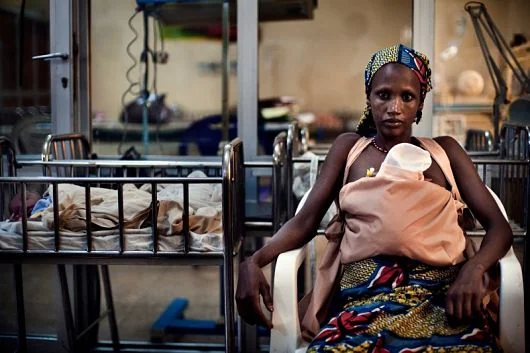
A community health worker speaks with mothers during a maternal and child-health outreach programme. Illustrative image. Source: Abdul Latif Jameel Poverty Action Lab, J-PAL.
By Robinson Afamefuna Ambrose
Nigeria recorded 3,273 maternal deaths in health facilities during the first nine months of 2026.
More than three-quarters occurred in the Northwest and Northeast.
The 2026 Joint Annual Review Statistical Book recorded 1,457 maternal deaths in the Northwest and 1,051 in the Northeast. Together, the two regions accounted for 2,508 deaths, approximately 77 per cent of the national total reported by health facilities.
Kano, Borno, Jigawa, Yobe and Katsina carried the heaviest burden. The five states alone accounted for nearly half of all recorded maternal deaths.
These are figures reported by hospitals and other health facilities. They do not include every woman who died at home, during transportation or in communities where the death was never formally recorded.
The actual number could therefore be higher.
A national improvement hiding a regional crisis
At first glance, Nigeria’s national figures appear to show progress.
Facility-reported maternal deaths fell from 5,391 in 2024 to 4,455 in 2025 and 3,273 between January and September 2026.
The federal government has also reported improvements in antenatal attendance, skilled deliveries and emergency obstetric services.
But the national decline conceals a sharp regional divide.
While many southern states recorded fewer than 50 maternal deaths, the numbers remained considerably higher across the Northwest and Northeast.
The Southeast recorded 64 deaths, compared with 1,457 in the Northwest. Osun reported four, Abia five, Enugu eight, Ekiti nine and Bayelsa nine.
The difference cannot be explained simply by population.
It reflects unequal access to emergency obstetric care, trained health workers, blood supplies, functioning operating theatres and hospitals that women can reach before complications become fatal.
When distance becomes a medical emergency
Pregnancy can change from normal to life-threatening within minutes.
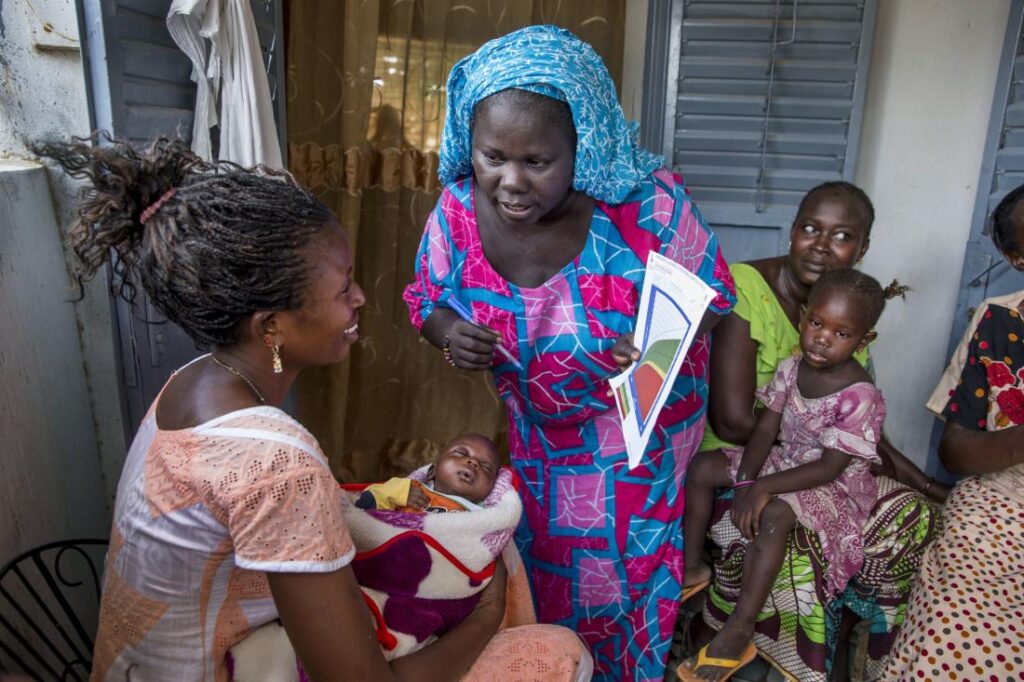
A mother holds her newborn inside a maternity ward in Nigeria. Illustrative image. Source: The Borgen Project.
A woman who begins bleeding heavily after childbirth may require blood, surgery and specialist attention almost immediately. A woman experiencing obstructed labour may need an emergency caesarean section. Eclampsia can cause seizures, organ failure and death if treatment is delayed.
In many rural communities, the first challenge is reaching a health facility.
Roads may be damaged or unsafe. Ambulances may be unavailable. Commercial drivers may demand payment before transporting a patient. Families sometimes have to raise money while the woman is already in labour.
A primary healthcare centre may be nearby, but proximity does not guarantee capacity. Some facilities lack doctors, midwives, blood banks, reliable electricity or surgical equipment.
When a facility cannot manage the emergency, the woman must be referred elsewhere. Another journey begins, and more time is lost.
Nigeria’s maternal mortality problem is therefore also a transport, staffing, infrastructure and financing problem.
The Joint Annual Review found that the maternal mortality ratio in rural areas stood at 656 deaths per 100,000 live births, compared with 444 in urban areas.
A woman’s chances of surviving childbirth can depend heavily on where she lives.
The shortage of skilled personnel
Buildings alone cannot save lives.
Hospitals need midwives, obstetricians, anaesthetists, laboratory workers and nurses available when complications occur, including at night and during weekends.
Many rural facilities struggle to recruit and retain trained personnel. Health workers may be reluctant to accept postings in communities without secure accommodation, electricity, schools or transport.
Nigeria has also continued to lose doctors and nurses to migration.
For the professionals who remain, the working conditions can be punishing. A small maternity team may be responsible for several patients while managing shortages of medicines, blood and equipment.
The federal government says it has recruited thousands of skilled birth attendants and community health workers. It has also expanded emergency referral services and re-equipped hundreds of facilities for obstetric and newborn care.
Those investments matter. But the concentration of maternal deaths in northern Nigeria shows that the improvements have yet to reach women equally.
The blood shortage
Severe bleeding is one of the leading causes of maternal death.
Stopping the bleeding may require surgery, medication and an urgent blood transfusion. Yet blood is not always available when it is needed.
Some hospitals ask relatives to find donors or purchase blood from another facility while the patient’s condition deteriorates.
Blood shortages are especially dangerous in communities located far from major hospitals. Even where blood is available, families may struggle to pay for screening, storage, transportation and transfusion materials.
A functioning maternal health system cannot depend on relatives searching for donors during an emergency.
Hospitals treating pregnant women must have reliable access to safe blood before the patient arrives.
The families abroad who finance childbirth at home
The burden does not stop at Nigeria’s borders.
Nigerians living in Europe, North America and elsewhere routinely send money home to pay for antenatal appointments, medicines, delivery fees and emergency surgery for relatives.
A pregnancy that begins with routine financial support can suddenly become an urgent appeal for hundreds or thousands of euros.
A relative abroad may receive a late-night telephone call saying that a woman needs a caesarean section, blood or transfer to another hospital. Treatment can be delayed while the family searches for money and confirms payment.
For many diaspora families, financing maternity care has become a private substitute for an unreliable public system.
Their support saves lives. But survival should not depend on whether a pregnant woman has a brother in Germany, a sister in Britain or a cousin in the United States who can transfer money immediately.
Women without those connections face greater danger.
The limits of facility figures
The reported numbers require careful interpretation.
They cover deaths recorded in health facilities. They cannot fully measure what happens to women who deliver at home, use informal birth attendants or die before reaching a hospital.
The figures may also reflect differences in reporting. A state with a stronger reporting system could record more deaths than a state where many cases never enter the official database.
This does not make the data meaningless.
It shows why Nigeria needs a stronger system for investigating every maternal death, whether it occurs in a teaching hospital, a rural clinic, a private maternity centre or at home.
Each death should answer basic questions.
Was the complication recognised early? Was transport available? Did the first facility have trained personnel? Was blood available? Was the referral completed in time? Did the demand for payment delay treatment?
Without those answers, the country records deaths without learning enough from them.
Progress must reach the women at greatest risk
The government says emergency transport has expanded across high-burden local government areas and that hundreds of health facilities have been upgraded to provide emergency obstetric and newborn care.
It also reports that participating facilities have performed tens of thousands of free caesarean sections.
These are important interventions.
But national announcements must be tested against what happens when a woman develops complications in a remote community in Borno, Jigawa, Yobe, Kano or Katsina.
Can she reach a functioning hospital?
Is a trained professional available?
Can the hospital perform surgery?
Is safe blood ready?
Will treatment begin before her family finds the money?
The answers determine whether healthcare reform exists only in government reports or reaches the women whose lives depend on it.
Nigeria’s maternal mortality crisis is often presented as a collection of statistics. Behind each number is a woman who did not return home, a newborn who may grow up without a mother and a family left to ask whether the death could have been prevented.
In most cases, it could have been.
The figures from northern Nigeria are a warning. Progress measured nationally will remain incomplete while the place where a woman lives continues to determine whether she survives childbirth.