By Ugochukwu Ugwuanyi
Deafening silence! That’s what religious organisations often get away with amid public scrutiny—something corporate organisations simply cannot afford. One wonders whether this brazen equanimity has persisted without serious repercussions because, as philosopher Karl Marx observed centuries ago, religion is the opium of the masses.
The silence is particularly alarming because where major allegations demand a response, mum has often been the word. In the last couple of days alone, at least two such incidents dominated social media timelines without any official rebuttal.
An internet personality, while appearing on the Outside the Box podcast, recounted how the vicar of an Orthodox parish in the Chevron area of Lagos allegedly attempted to exploit her vulnerability after she had been evicted by her uncle. According to her account, the resident reverend father demanded sex in exchange for shelter—a proposition she rejected, choosing instead to spend the night on the streets after using her last ₦1,000 to buy weed for area boys in return for protection. She cited the incident as the reason she stopped attending church.
Another controversy followed shortly afterwards.
A TikToker, @vaemonie, reportedly claimed, “We’re hired actors,” referring to herself and other participants at the healing institute of a prominent televangelist. She alleged that her supposed healing from sickle cell anaemia had been staged and described an environment that, according to her, discouraged anyone from questioning the ministry’s claims. She further recounted that the cousin of one of her spiritual circle leaders died of cancer despite firmly believing assurances from the healing school that she had already been healed. As the allegation spread, a 2004 newspaper front page resurfaced online and was used by many to reinforce her claims.
On a lighter note, another widely circulated testimony told of a prisoner in Spain who was allegedly released after a Nigerian pastor ministered during a church service. According to the testimony, the prison alarm sounded unexpectedly and a mysterious voice instructed officials to “Release Tobias.” Predictably, many online users ridiculed both the testimony and the ministry behind it. Given Spain’s reputation for institutional order, critics found the account implausible. If the testimony had been misunderstood or exaggerated, a formal clarification from the ministry could have provided valuable context.
Without prejudice to the truth or otherwise of these claims, allowing even a scintilla of character assassination to linger unanswered can be damaging. One only needs to observe how an allegation dating back decades resurfaced to reinforce a contemporary accusation. Yet churches often appear reluctant to defend their reputations.
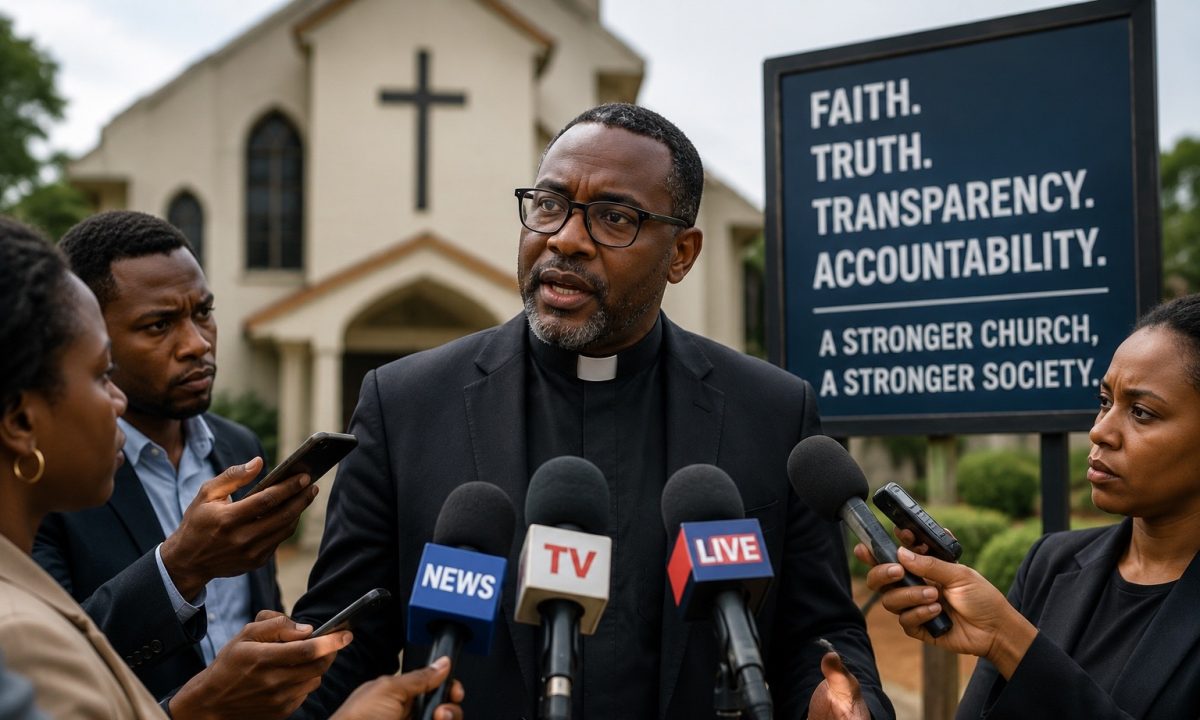
No one expects them to become combative, aggressive, or prosecutorial. However, their own side of the story deserves to be heard—and promptly too. There is a reason the Right of Reply exists and remains a respected principle of journalism. One can only imagine how conversations surrounding the healing school allegations may affect the confidence of prospective participants.
Churches cannot claim the same silence that Isaiah 53:7 attributed to the Lord Jesus:
“He was oppressed, and he was afflicted, yet he opened not his mouth…”
Denominational leaders understand that Christ remained silent because the accusations against Him ultimately fulfilled the purpose of His earthly ministry. Their hatred and persecution advanced His mission. The present situation is entirely different. Allegations directed at churches today concern institutional credibility, not redemptive purpose.
We will not tabernacle on the substance of these allegations because we do not possess the facts. Only the Omniscient and those directly involved know where the truth lies.
To be clear, this intervention is neither driven by bias nor by any conclusion about the allegations themselves. As the essayist, I claim no authority to determine such matters. I write simply as a branding specialist who understands what erodes brand equity and appreciates the price the Body of Christ pays when one prominent denomination acquires a negative public reputation.
After all, one oil-stained finger can soil the whole.
Editor’s Note
This article is published under Faith | Culture. The views expressed are those of the author and do not necessarily reflect the editorial position of Mirror African Diaspora.
Author Bio
Ugochukwu Ugwuanyi is a branding specialist, storyteller, media trainer, and public affairs commentator. He writes on faith, public relations, corporate communications, branding, reputation management, and leadership. He welcomes readers’ feedback via nmiringwu@gmail.com.